Assess the situation
Identify the source, immediate safety concerns, affected rooms, and materials that may be holding moisture.
Frisco water-damage response
Leaks, overflow, or stormwater can feel overwhelming. Tell us what happened and where the water reached—we’ll help you understand the next practical step.

Explain what happened. Get straightforward guidance about the response process.
A reassuring first call
If it is safe, stop the source and avoid water near electricity. We’ll ask about the rooms, flooring, walls, and belongings involved so the response can focus on what matters most.
A practical response
The exact approach depends on the source and materials involved. These are the questions that organize the next step.
Identify the source, immediate safety concerns, affected rooms, and materials that may be holding moisture.
Prioritize belongings and materials that need attention while planning water removal and moisture checks.
Coordinate controlled drying, cleanup, and the restoration decisions that follow once moisture is addressed.
Frisco homes and businesses
From Stonebriar and The Star area to Panther Creek and Phillips Creek Ranch, we help Frisco property owners make sense of indoor water problems without adding confusion.
Call for clear next stepsWhere the water began
A supply-line leak and rain entering through the roof can reach similar rooms, but they raise different questions. The first conversation should establish what happened, whether the source has stopped, and the path the water may have taken.
A failed connection, pipe, or fixture can release water into cabinets, wall cavities, flooring edges, and adjacent rooms. Note the nearest shutoff and when the leak was discovered.
Dishwashers, washing machines, refrigerators, and water heaters can affect the surface below them as well as nearby baseboards, cabinets, and stored items.
An overflow may move beyond the room where it started. Doorways, floor transitions, lower levels, and the ceiling beneath an upstairs bathroom all deserve attention.
Wind-driven rain or a roof opening may involve ceilings, insulation, walls, trim, and belongings. Tell us where staining or dripping first appeared.
Discoloration, swelling, damp trim, or a recurring odor can point to moisture that developed over time. The visible symptom may not reveal the full affected area.
You do not need to diagnose the problem before calling. Describe what you can see, where it is located, and what changed; those details create a useful starting point.
Materials hold water differently
A response plan should consider the material, how it was installed, and whether moisture may have moved underneath or behind it. Surface appearance alone does not answer every drying or repair question.
Water can move through seams and reach underlayment, adhesive, or subflooring. Changes at edges, transitions, or baseboards are useful details to report.
The carpet surface, padding, tack strips, and floor below may not dry at the same rate. The source and length of exposure help shape the next decision.
Wall and ceiling assemblies can hold moisture out of view. Staining, softened material, bubbling paint, or damp trim may help identify where assessment is needed.
Toe kicks, cabinet seams, built-ins, boxes, upholstery, and irreplaceable belongings should be considered alongside the structure—not as an afterthought.
Understanding the scope
There is no honest flat answer for every property. The necessary work depends on the incident itself, which is why a clear description and assessment matter before repair decisions are made.
Read the Frisco homeowner guideEach service answers a different question about the source, water path, affected materials, and condition of the property.
Address accessible water and identify where it may have moved beneath finishes or into adjoining areas.
Consider flooring systems, wall bases, cabinets, ceilings, insulation, and connected rooms—not only the visible spot.
Plan air movement, dehumidification, access, and progress checks around the actual materials and conditions.
Connect material handling and cleanup decisions to a clear, repair-ready handoff once conditions are understood.
A useful restoration contact asks about timing, source, rooms, materials, safety concerns, and what changed before recommending a direction.
Know which areas and materials are part of the conversation and why.
Understand how removal, moisture checks, drying, cleanup, and repairs fit together.
Call without completing a form or waiting on a text thread.
Frisco homeowner questions
It can. The visible flow may stop while flooring, cabinets, drywall, insulation, trim, or contents remain damp. Understanding where the water traveled helps organize the next step.
Yes. Depending on the material and installation, water can move through seams, along edges, or beneath a finished floor. Surface dryness does not always describe the layers below.
Air movement may help in some circumstances, but the source and affected materials should be understood first. Avoid electrical hazards and do not use equipment in an unsafe area.
Share the likely source, when you noticed the problem, which rooms or levels are involved, and whether water reached floors, walls, ceilings, cabinets, or belongings.
Not every situation is identical. The source, duration, moisture conditions, material condition, and location all matter. An assessment provides a better basis for that decision than appearance alone.
There is no single responsible estimate without understanding the affected materials and conditions. Moisture levels, airflow, access, and the extent of the incident can all influence the process.
Water can reach toe kicks, seams, backing, nearby drywall, and the floor below cabinets. Swelling or staining can be helpful observations, but they may not show the entire path.
Stopping the source and protecting the property are important, but covering or rebuilding over materials before moisture conditions are understood can make the problem harder to evaluate.
Start with the source, the affected rooms, and how long the area may have been wet.
Protect the property from the full water path
Water can move under flooring, wick into drywall, soak insulation, reach cabinets, and cross into adjoining rooms. Fast extraction matters, but controlled drying and moisture checks are what help prevent avoidable demolition, lingering odors, and mold growth.
Extract standing water from accessible areas so it cannot keep soaking flooring, trim, drywall, and contents.
Check beneath flooring, behind baseboards, inside wall cavities, around cabinets, and in connected rooms for moisture that is easy to miss.
Use air movement, dehumidification, targeted access, and moisture monitoring to dry affected materials—not just the room air.
Clean affected surfaces and address debris or residue based on the water source and the materials involved.
Identify what can reasonably be dried or cleaned and what may need removal before damage spreads or odors settle in.
Move from mitigation into documented repair planning once affected areas have reached appropriate drying goals.
What is at stake
The priority is to stop ongoing damage, remove standing water, locate moisture in connected materials, and dry the structure before avoidable swelling, staining, odor, or microbial growth gets worse.
Locate the source, remove accessible water, and protect belongings or materials that are still at risk.
Inspect the water path in flooring systems, walls, cabinets, ceilings, and adjoining rooms—not only the visible puddle.
Use moisture monitoring to guide drying and material decisions before cleanup turns into repair work.
We work with property insurance claims by helping document the loss with photographs, condition or moisture information, and restoration scope details, and we can coordinate with your insurance adjuster when requested. Coverage, deductibles, and payment decisions remain subject to your policy and carrier.
Property owners throughout Frisco, TX can call for help with assessment, cleanup, documentation, and a practical restoration plan based on the damage found at the property.
Plan the full water-damage response
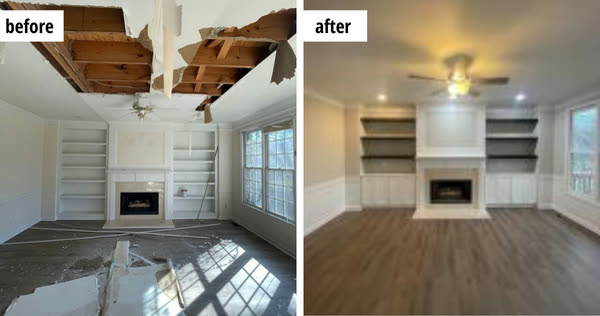
A useful restoration plan connects the visible damage to the materials beside, below, and behind it. The goal is not a quick cosmetic change; it is a dry, usable space with a clear path toward repairs.